


The Value of Giving 2022
The total value of charitable giving in 2022 – volunteering and donating combined – was £23 billion
Volunteering
- In 2022, we estimate that the annual value of voluntary work in the UK was £18.7 billion.
- The Covid-19 pandemic and associated restrictions caused the annual value to fall to £11.0 billion in 2020. But 2022 saw a strong recovery, with the value of volunteering returning to pre-pandemic levels. Since the pandemic, volunteer numbers have grown, but the average hours spent volunteering has fallen.
- The pre-pandemic decade saw a steady rise in the value of volunteering, from £11.2 billion in 2010/11 to £18.7 billion in 2018/19.

Donating
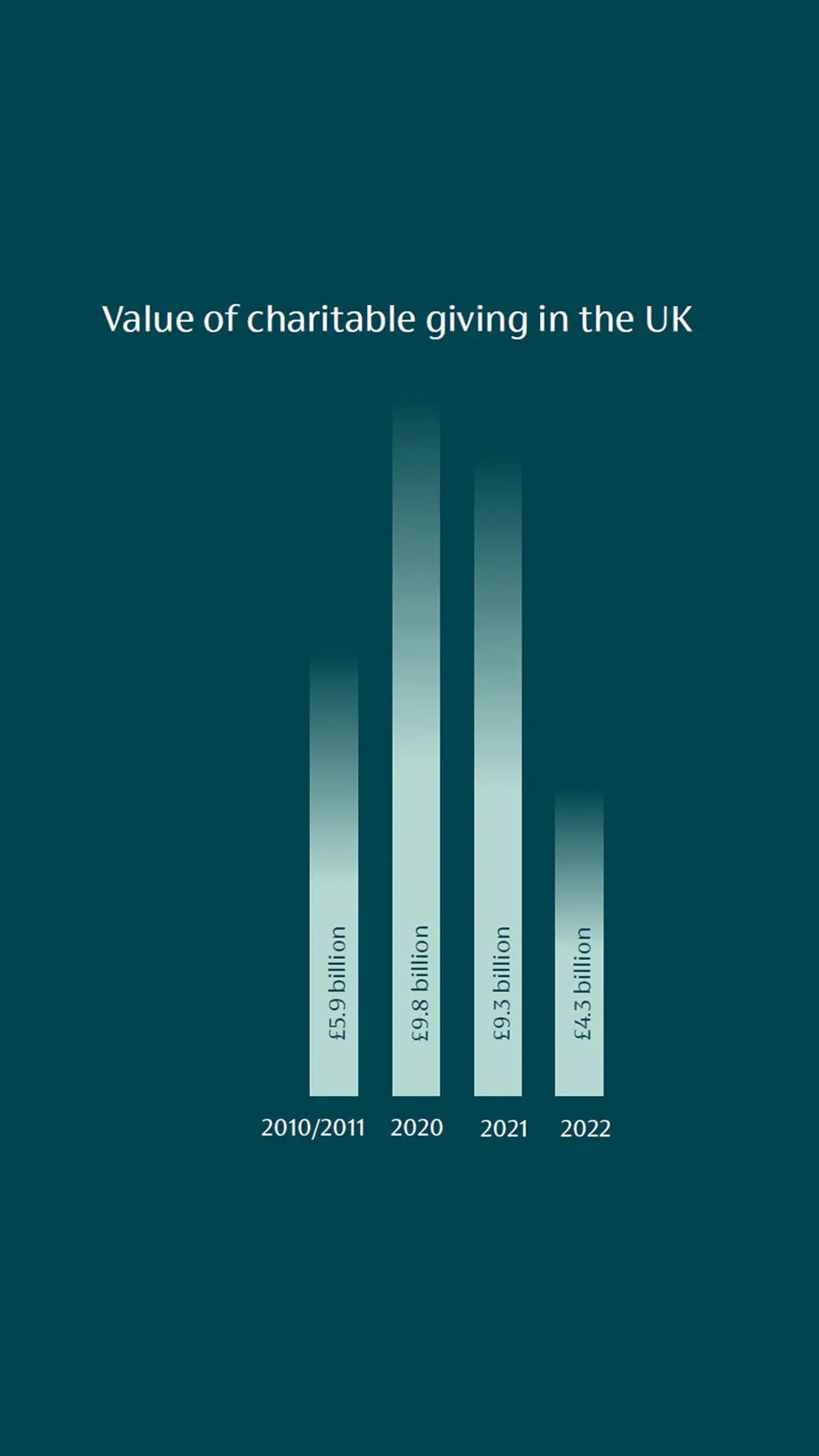
- We estimate that the value of charitable donations fell to £4.3 billion in 2022, down sharply from £9.3 billion in 2021.
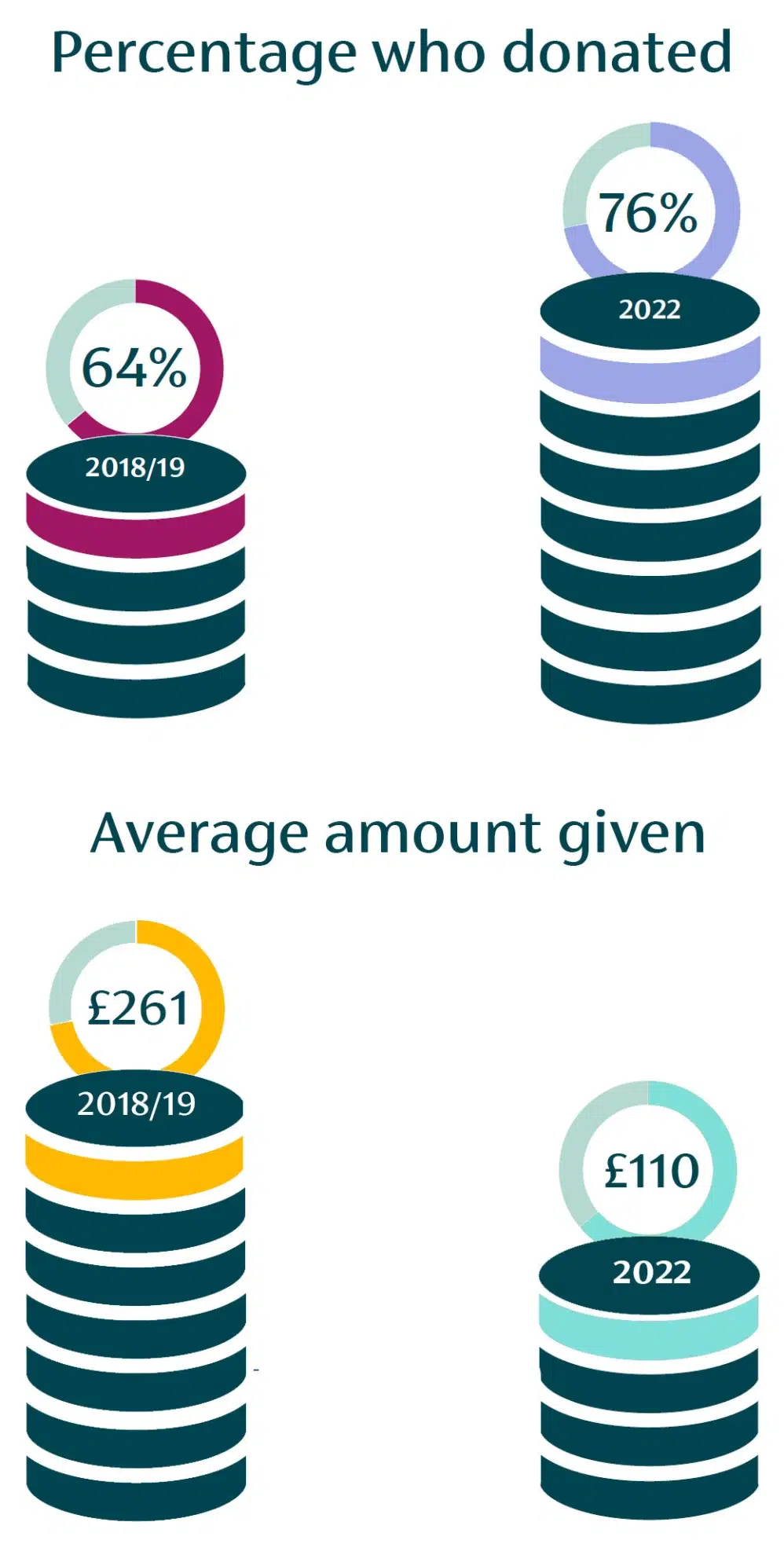
- This significant drop is likely down to the cost-of-living crisis, with UK inflation reaching 40-year highs throughout the year. 76% of adults donated to charity in 2022, up from 64% in 2018/19, but the average amount given by those donating over a year almost halved since the onset of the pandemic, from £261 in 2018/19 to £101 in 2022.
- The fall in donations reverses a decade-long upward trend, from £5.9 billion in 2010/11 to an estimated £9.8 billion in 2020.
Individual benefits
- Our analysis shows that volunteering and donating benefit the individuals concerned, as well as wider society.
- On a scale of one to 7, UK adults that both donate to charity and volunteer have an average life satisfaction score of 5.4. For those that don’t engage in any charitable giving, the figure is 4.9.
- Econometric analysis indicates that providing nine hours of voluntary work per month is associated with the same increase in life satisfaction as earning an additional £1,000 per month.
- Volunteering and donating to charity are also associated with more positive mental health outcomes. For instance, volunteers are significantly more likely to say that they feel optimistic about the future than adults who do not volunteer.

Foreword
It is with great pleasure that I present Benefact Group’s Value of Giving report, which, for the first time, shines a light on the hidden value that charities contribute to the UK economy, as well as our collective wellbeing.
Charities are the lifeblood of communities up and down the UK, providing support and essential services to those most in need. Together, they employ over a million people, and rely on the time and goodwill of an army of volunteers. The services they provide help millions of people lead safer, healthier, and more fulfilling lives.
But until now, we didn’t know the real value of that contribution. Working with analysts at the Centre of Economic and Business Research (CEBR), we found the combined value of volunteering and donations in 2022 to be an incredible £23billion – bigger than the sports and gambling sector. Our research also found those who volunteer, donate or both, have a higher average life satisfaction and better mental health.
The findings only serve to underline the fundamental importance of the charity sector to our economy and society.
As the third largest corporate donor1 in the UK, we’re a proud supporter of charities. We are an international group of financial services businesses that gives all available profits to charities and good causes.
Driven by our purpose to contribute to the greater good of society, we’ve given nearly £200m to good causes in recent years. We’re also passionate about the power of volunteering, with all our colleagues encouraged to volunteer for at least one day a year. Last year they contributed almost 4,000 hours, supporting causes important to them.
We encourage all businesses to donate to charity and empower their employees to volunteer. The combined effort of corporates collectively donating a proportion of their profits and the public kindly giving up time to volunteer can drive a crucial movement for good within society.
This report is part of our ongoing efforts to celebrate the charity sector and its contribution to wider society. We hope it helps stimulate change and enables charities to garner further support for their incredible work– be that time, expertise, or money. After all, if there is one key take away from this report, it’s that charitable giving is good for society and good for those who do the giving – a win-win.
Introduction
Volunteering and charitable giving are central to civic society. Think of the volunteers who run the charity shops on every high street, or the donations that fund vital medical research. There are a thousand similar examples.
But the real value of all this giving – of time or money – is hidden in economic terms because it is not adequately reported or measured. For example, GDP, the most important measure of a country’s level of economic activity, does not include voluntary work and charitable activities.
Volunteers and donors are part of the lifeblood of our society, but to fully appreciate them we need to truly understand the value of their contributions. That’s why Benefact Group commissioned Centre for Economics and Business Research (Cebr) to quantify the value of voluntary work provided in the UK, as well as the amount that people give to charitable causes.
And we wanted to take our findings a step further. As well as understanding what giving does for society and the economy, we wanted to find out about the impact it has on the people who do it. Does volunteering or donating make a difference to our lives? Does it bring greater life satisfaction?
Why is any of this important? Partly, it’s because when we understand the impact something has, we’re more likely to support it. From governments to individuals, we believe everyone should appreciate the contribution our charity sector makes, and the people who give their time and money to make it work.
And partly it’s because the charity sector is a major part of our economy. Over a million people currently work in the sector. That’s roughly the same as the number of people who work in financial services. It’s more than a third of the number of people who work in retail, the UK’s largest private sector employer.
But the figure for paid staff is dwarfed by the number of people who volunteer, in some form and in some way. Government figures suggest around 28 million of us did some form of volunteering in the last 12 months.
We understand that these figures can change and there may be bumps in the road ahead. The cost-of-living crisis is driving down real incomes and having an impact on people’s ability to donate. We consider this in detail later in the report.
Nevertheless, charity has a huge impact, directly and indirectly. But until now much of that impact has been opaque. This report aims to bring it out into the light, and shows the value of giving, for the economy, society and the individuals who generously donate their time and money.
Methodology
The majority of the empirical research in this report is based on proprietary econometric analysis of the UK Household Longitudinal Survey (UKHLS), which provides detailed information on life in our country at an individual level.
The UKHLS tracks a large sample of individuals in the UK over time. The survey contains responses from more than 34,000 adults, making it a reliable and accurate representation of the British population. The questionnaire includes questions on the frequency and volume of voluntary work, and the frequency and level of charitable donations.
This data also enables us to apply an econometric estimation model in order to specify the impact that being a volunteer or donor has on an individual’s life satisfaction.
We used the UKHLS to calculate the volume of voluntary work between 2010/11 and 2021. The UKHLS analysis was then updated using the results from a bespoke survey of 2,000 UK adults commissioned for this research, assessing qualitative attitudes towards volunteering and charitable giving against the backdrop of increasing living costs. Fieldwork was carried out by Sapio during September 2022. We used further data sets, including those from the Charities Aid Foundation (CAF), to bridge gaps in knowledge in regard to charitable giving.
Using official data for hourly wages, we assigned a monetary value to this voluntary work. The rationale is that people provide work for free, for which they could usually be paid an hourly wage. This is then upscaled using population data to gain the overall annual value for a given year. Similarly, the average amount that people donate to charities is upscaled to arrive at annual values for the UK.
After quantifying the value of volunteering and altruistic giving, we analysed the effect that giving has on the individual. In particular, we looked at whether volunteering and giving to charity was associated with an increase in a person’s self-reported life satisfaction, and with better mental health outcomes. Our econometric analysis also considered other factors that may influence life satisfaction, such as income, to arrive at a series of robust conclusions.
The value of volunteering
From charity shops and food banks to ancient monuments and community centres, large sections of our society either couldn’t operate or couldn’t reach their full potential without the commitment and generosity of an army of volunteers.
However, the economic value of their work has to date been overlooked. Official economic statistics do not measure the volume of volunteering and, as it is unpaid, it is difficult to assign a monetary value to these activities.
Using data on volunteering patterns from the UK Household Longitudinal Survey (UKHLS) and official wage data, we have for the first time been able to put a monetary figure on the value of volunteering.
We estimate the value of volunteering in 2022 at £18.7 billion. To put this into perspective, foreign visitors to the UK spent in £2.34 billion 2019. In 2021, agriculture’s contribution (Gross Value Added) to the UK economy was just over £11 billion.
These figures aren’t directly comparable, but they help to illustrate the importance of the people who serve their communities voluntarily. Without volunteers, we would have to pay billions of pounds more in wages or lose billions of pounds worth of services.
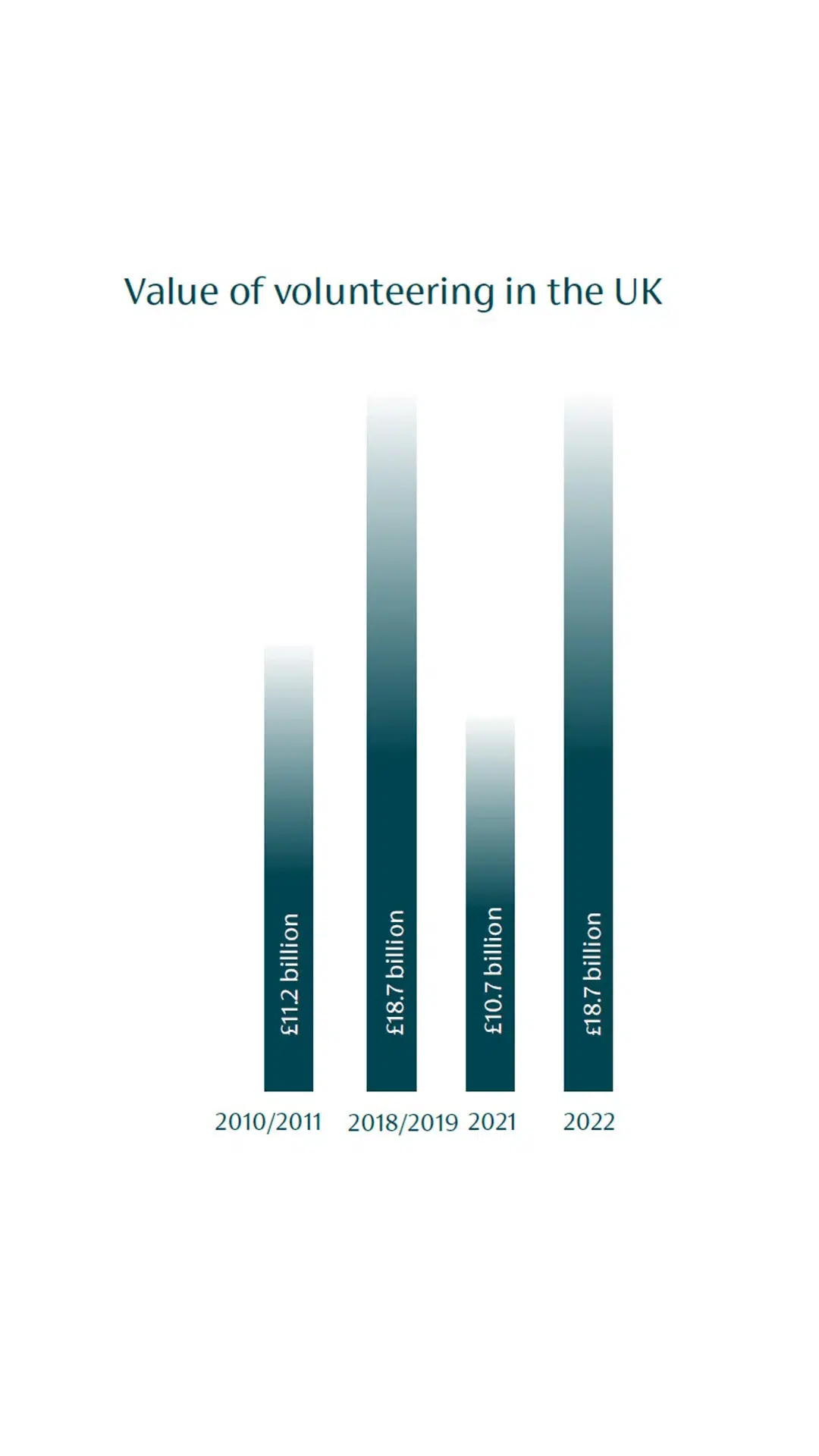
The value of volunteering has risen significantly in the last decade, from £11.2 billion in 2010/11 to £18.7 billion in 2018/19. It fell sharply during pandemic lockdowns, as events were cancelled, properties closed, charitable services moved online and concern about social interactions spread. But even in 2021, the value of volunteering was still £10.7 billion. Our estimate suggests that it has bounced back to pre-pandemic levels in 2022.
What has driven the increase of volunteering in the last decade?
The years following the financial crash of 2008/9 were an era of austerity. The pandemic followed. It could be that as more people needed charitable services, more volunteers stepped up to fill in gaps. In addition, the growth in corporate social responsibility (CSR) initiatives may have contributed to an influx of corporate volunteers.
But at least some of the increase can simply be put down to population growth. The number of persons aged 16 and older in the UK increased from 51.4 million in 2011 to 54.1 million in 2019. Even with volunteering rates remaining roughly the same, the value of volunteering increased because more people were doing it.
Our fresh data shows a post-pandemic surge in volunteering, from 17.9% of adults in 2018/19 to 29.7% in 2022. The sharp rise in the volunteer share likely reflects the return to in-person contact after restrictions were eased, and potentially also the mass mobilisation of volunteers for the vaccination programme itself over the year to September 2022. But the data also shows a drop in the average hours spent volunteering among those who do volunteer, from 12 hours over a four week period in pre-pandemic 2020 to 10.9 hours in 2021.
A subsequent sharp fall is seen in the 2022 data, with the average volunteer spending 6.0 hours volunteering over a four-week period. As such, while these results point to a broader pool of UK volunteers than before the pandemic, the typical volunteer now spends less time doing so each month. These two forces have worked in opposing directions to bring the total value of volunteering back to pre-pandemic levels.
Our regional analysis shows that the share of volunteers within the population rose in all regions, pointing to an across-the-board uptake of increased volunteering opportunities. But there were regional differences. In 2022, 43.1% of adults in London did some volunteering. This was followed by the West Midlands and Scotland, where over a third of adults also reported volunteering.
In 2022, three of the five regional clusters have seen the value of volunteering rise above 2018/19 levels: London (49.8% above), the Midlands (10.6% above), and Wales, Scotland and Northern Ireland combined (6.5% above).
The return to pre-pandemic levels of volunteering is encouraging, but there may be trouble ahead. Nearly every participant in our latest charity Movement for Good roundtable talked about post-pandemic challenges with attracting staff and volunteers. And Covid, of course, is far from over. Illness and the fear of illness may keep more volunteers at home. The cost-of-living crisis is also likely to hit the sector, as volunteers look for paid employment to cover rising costs, and cut out unnecessary journeys..
The value of charitable giving
We estimate that the amount of money donated to charity in 2022 was £4.3 billion, which is significantly down on the £9.3 billion donated in 2021. While the 2021 figure is, in turn, a slight dip on our figure for the previous year (£9.8 billion in 2020), it is significantly higher than the £5.9 billion donated in 2010/11. In this respect, giving mirrors volunteering, with a steady increase through the second decade of the century up to the current year.
The figures for 2022, which are based on our bespoke survey of 2,000 adults rather than UKHLS data, dramatically reverse this trend. Charitable donations fall below 2010 levels. We’ll explore some of the reasons for that later in this section.
Despite this downturn, the value of monetary giving is hard to overstate. Without it, over the past decade, the state or private individuals would have had to spend between £6 billion and £10 billion a year more on (in many cases) vital services, research and resources, or do without them altogether. It’s not hyperbole to say that, in the UK, charitable giving is vital to a functioning society.
The value of donations during the first two pandemic years – at an average of £9.6 billion – is actually higher than expected given the five-year pre-pandemic trend. This may point to a degree of substitution of charitable support away from in-person volunteering, amid lockdown restrictions, and towards donating.
What has happened to reverse this trend in 2022? Our estimate suggests the value of donations plunging by 54.3%. It’s unlikely that such a large swing can be explained by a change in methodology as our bespoke survey conducted in 2022 mirrored the UKHLS wording and used a statistically large sample size.
Donating and the cost-of-living crisis
Are people becoming disengaged with charities? Far from it. Our figures show that 76% of adults donated to charity in 2022, up from 64% in 2018/19.
But while more people are donating, they are donating less. The average amount given by those donating over a year has more than halved since the onset of the pandemic, from £261 in 2018/19 to £101 in 2022, a 61.5% reduction.
Why the change? It’s likely that rising prices are at least partly to blame. Driven by significant increases in energy and commodity prices, consumers faced increasing price pressures throughout the second half of 2021 and 2022.
Inflation averaged 2.6% across 2021. By October 2022, it had hit 11.1% and is expected to remain far above the Bank of England’s 2.0% target at least until early 2024.
Sharply rising prices are set to induce an economic slowdown in the final half of 2022 and into 2023, potentially leading to an increase in unemployment. For some, these factors may reduce their ability and willingness to make charitable donations and engage in volunteering.
Indeed, the results of our bespoke survey suggest that cost-of-living pressures have already led to a reduction in charitable giving. Among the 2,000 adults surveyed, 50.9% stated that the cost-of-living crisis has led them to donate less to charity. Just under a third (31.1%) said they donate ‘a little less’ and a fifth (19.8%) said they donate ‘much less’ as a result. Meanwhile, only 14.0% said that they are donating more due to the crisis.
When those giving less were asked why, the majority (55.4%) said they were cutting back on all non-essential expenditure. Many others (41.8%) blamed a fall in earnings. It’s clear that, as the cost-of-living crisis bites, most charities are likely to see public donations slide. The good news is that the apparent significance of price pressures suggests that donations could rise again quickly when the cost-of-living crisis abates.
Of the minority who are donating more, the majority (51%) say they want to help more people during a difficult time.

The total value of giving
When we add up the value of volunteering and the value of donating, it amounts to £23 billion in 2022.
For comparison, the pre-pandemic (2019) value of output in the creative, arts and entertainment industry was £8.6 billion.

The impact of giving on life satisfaction and mental health
In the previous section we quantified the impact that charitable giving – of time and money – had on the economy and society. But we wanted to take the research a step further, and produce a statistical analysis of the effects of charitable giving on the individuals concerned.
It’s generally understood that acts of charity can make us feel better about ourselves, and perhaps a little better about the state of the world. They give us agency in overwhelming times. They help us build real connections with our communities.
Our analysis of UKHLS data and our own bespoke survey confirms this impression. The results point to a significant positive relationship between acts of giving and life satisfaction, as well as a positive correlation with multiple indicators of mental health. Being charitable is good for the recipients of our charity. It is also good for us.
People give time or money to charity for different reasons. For some, they are ways to live according to their ethics or religious beliefs. For others, it may be that they find a purpose in their volunteering work or in the knowledge that their donations are having a positive impact in the world. Others still may find that the social aspect of volunteering and working with others is highly rewarding.
With this in mind, it seems plausible that those who give to charity or spend their time volunteering derive a benefit in terms of higher life satisfaction.
Our analysis bears this out. On a scale of one to 7, UK adults that both donate to charity and volunteer have an average life satisfaction score of 5.4. For those that don’t engage in any charitable giving, the figure is 4.9. That’s a significant difference.
Volunteering is associated with slightly higher life satisfaction than donating, though the difference is small. Those who only volunteer report an average score of 5.3. For those who only donate, the score is 5.2. That perhaps reflects the importance of human contact to a life well lived.
To put these results into perspective, we used econometric analysis to identify the amount of additional monthly personal income that would be associated with the same increase in life satisfaction. The results show that providing nine hours of voluntary work per month was associated with the same increase in life satisfaction as earning an additional £1,000 per month.
Giving £231 to charitable causes in a 12-month period was also found to increase life satisfaction by a similar level.
These are remarkable findings. Those who give their time or money to charity feel connected to a larger purpose. They see their own lives more positively as a result.
Volunteering, charitable giving and mental health
That positivity has a knock-on effect on mental health. Our analysis also found an association between charitable giving – of either time or money – and positive mental health outcomes.
Our bespoke research asked similar questions to the UKHLS about the emotions respondents felt in their day-to-day lives. Those emotions include:
– Feeling optimistic about the future – ranging from ‘very pessimistic’ to ‘very optimistic’
– Feeling useful – ranging from ‘not useful at all’ to ‘very useful’
– Feeling relaxed – ranging from ‘not relaxed at all’ to ‘very relaxed’
– Feeling close to others – ranging from ‘not close at all’ to ‘very close’
The figures present a correlation analysis and do not correct for other factors that might have an impact on mental health outcomes. As such, we cannot be certain about cause and effect. Nevertheless, in combination with the results above, they do suggest that both volunteering and donating are associated with improved mental health.
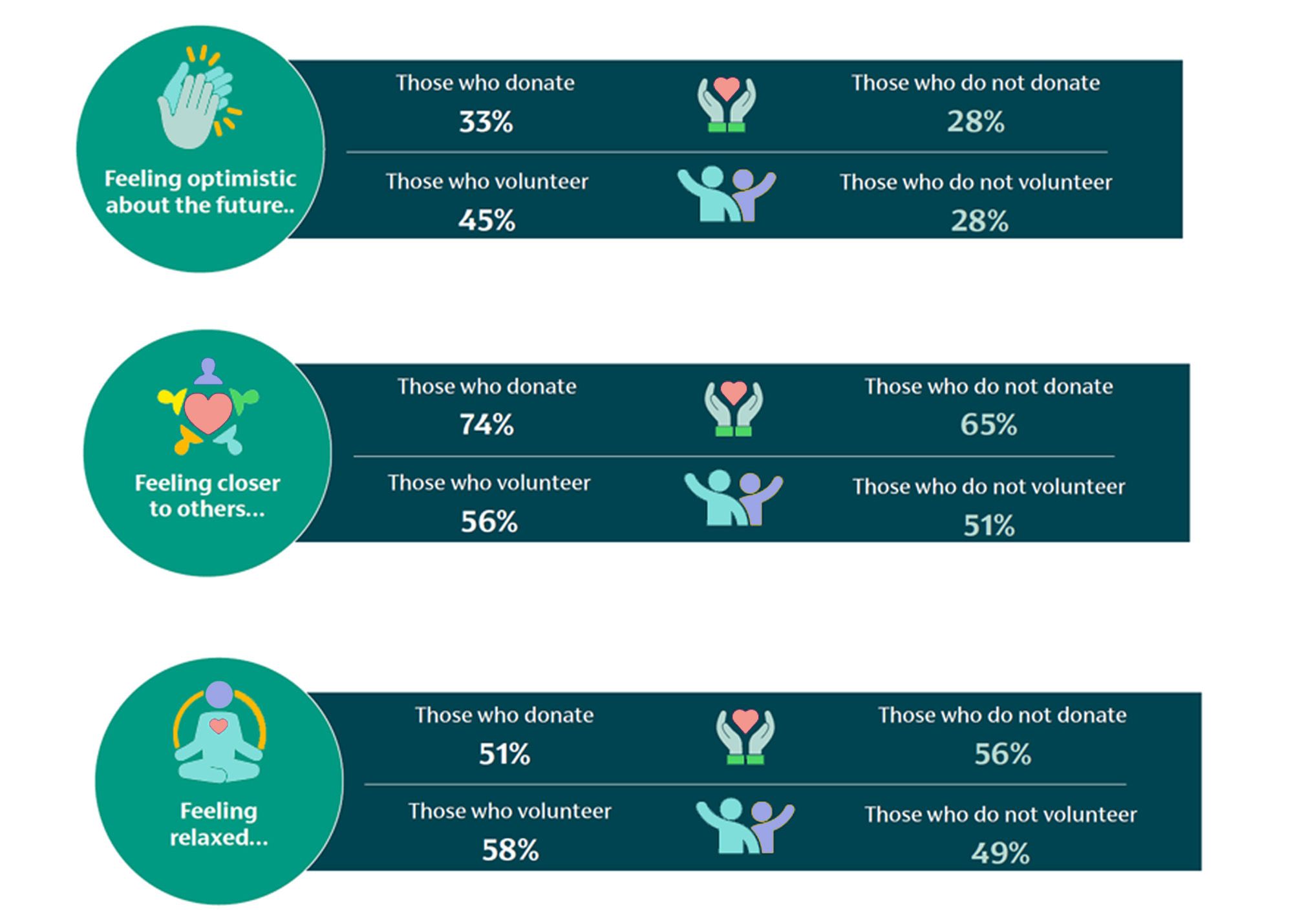
We found that over a third (33.8%) of adults who donate feel optimistic, compared to 28.2% of those who don’t. Similarly, nearly three quarters (74.1%) of donors feel close to others, compared to 65.4% of non donors. However, perhaps counterintuitively, non donors feel more relaxed than donors, by 56.3% to 50.8%.
Volunteers are even more optimistic, with 45.2% reporting this emotion compared to just 28.2% of those who don’t volunteer. Volunteers also feel more relaxed (58.1% compared to 49.2%) and useful (70.8% to 66.1%).
Those who both donate and volunteer also report more positive emotions than those who do neither. The gap is largest with respect to being optimistic. Those who both volunteer and donate are 1.7 times more likely to feel optimistic about the future (46.1% compared to 27.0%). This is followed by feeling close to others, which is felt by three quarters (74.6%) of those who donate and volunteer, compared to 65.4% among those who do neither. This correlates with our earlier survey findings that 57.3% of those who are volunteering more as a result of the cost-of-living crisis are doing so out of a desire to feel more useful in society.
Distribution of charities in the UK
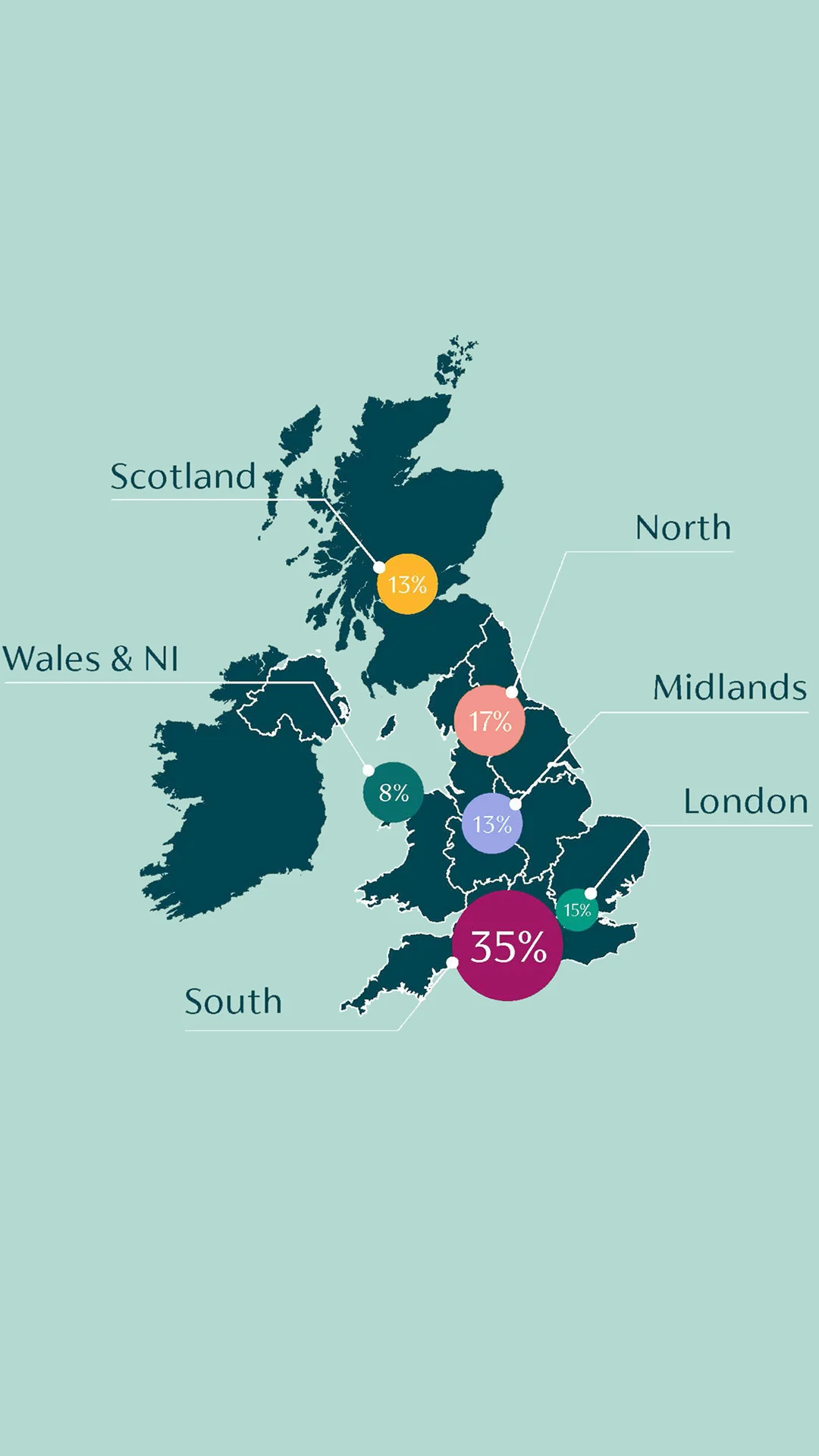
The largest share of charities is in the south of England.
Size of charities in the UK
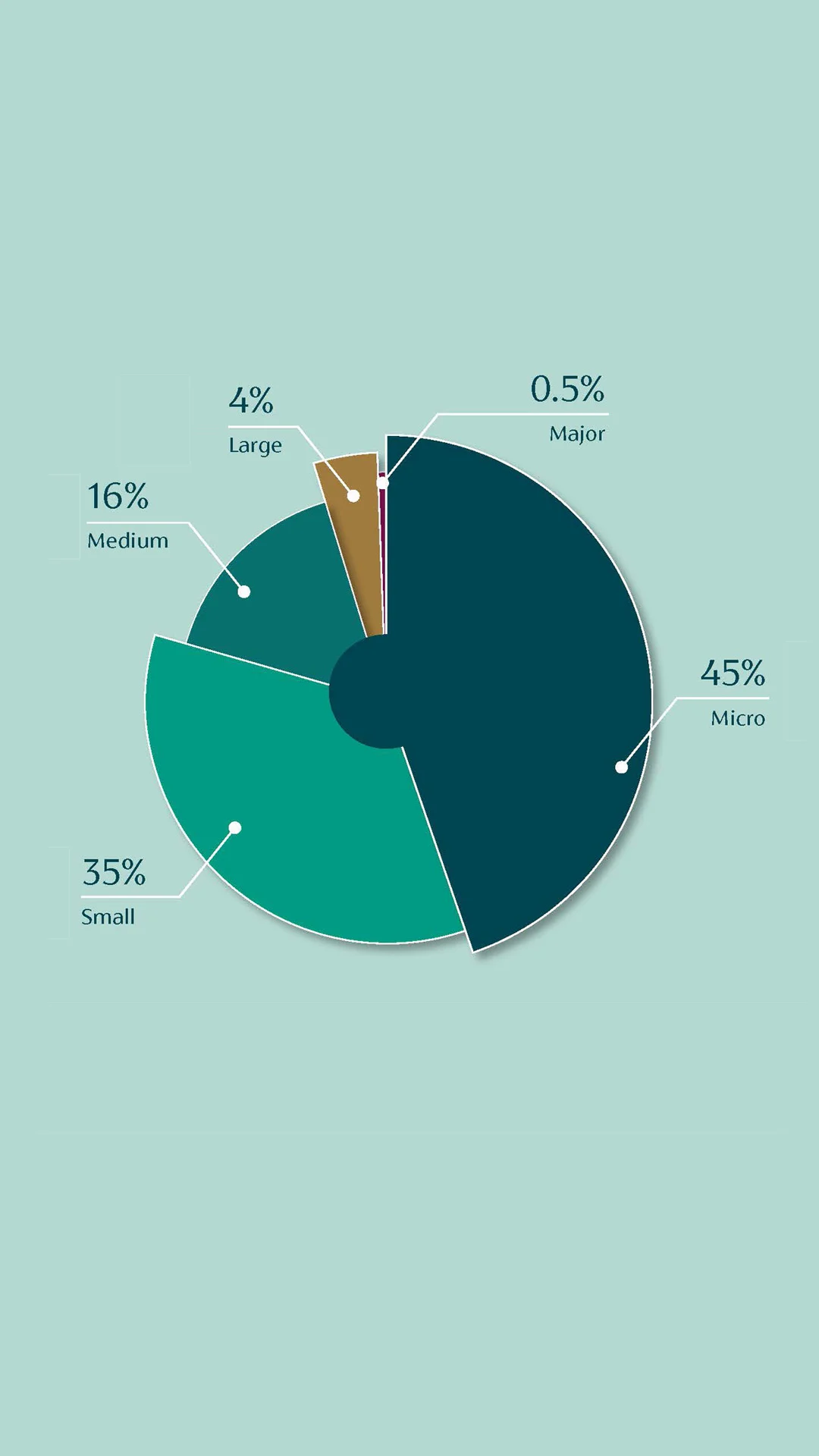
As of August 2022, 162,507 charities are registered with the Charity Commission for England and Wales.
The largest share of these organisations is made up of micro-organisations, which are defined as having an income of less than £10,000.
- £10,000 to £100,000 – small
- £100,000 to £1 million – medium
- £1 million to £10 million – large
- £10.0 million to £100.0 million – major
Charity types
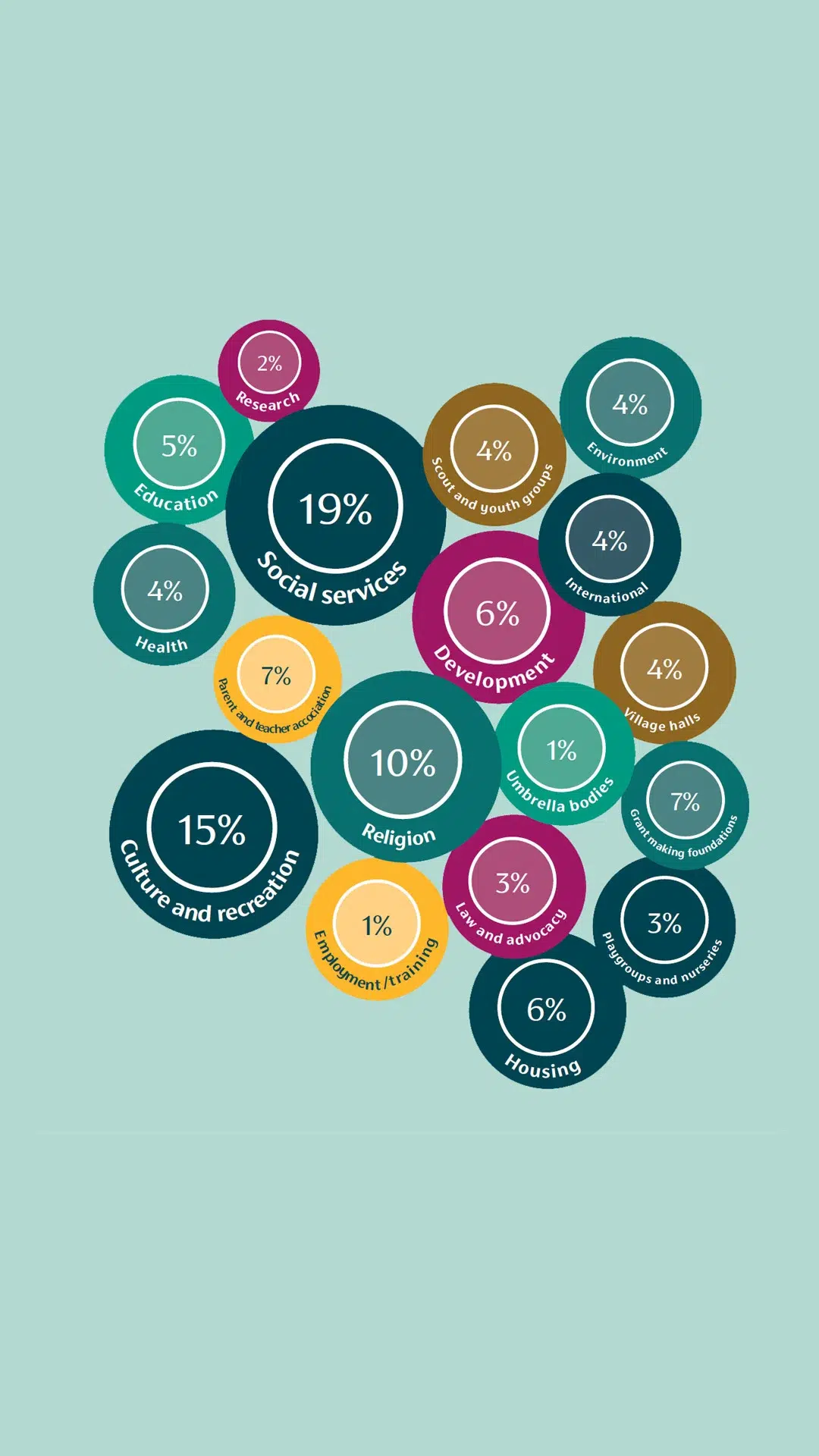
The largest share of charities are active in the social services subsector, with 19.1% of all charities, equivalent to 31,178 organisations in total.
This is followed by culture and recreation, which accounts for 23,836, or 14.6%, of all charitable organisations.
Charities related to religion and grant-making foundations account for 15,055 and 12,267 organisations, respectively.
At the other end of the range, employment and training organisations and umbrella bodies number 1,768 and 1,011 organisations, respectively.
Funding sources
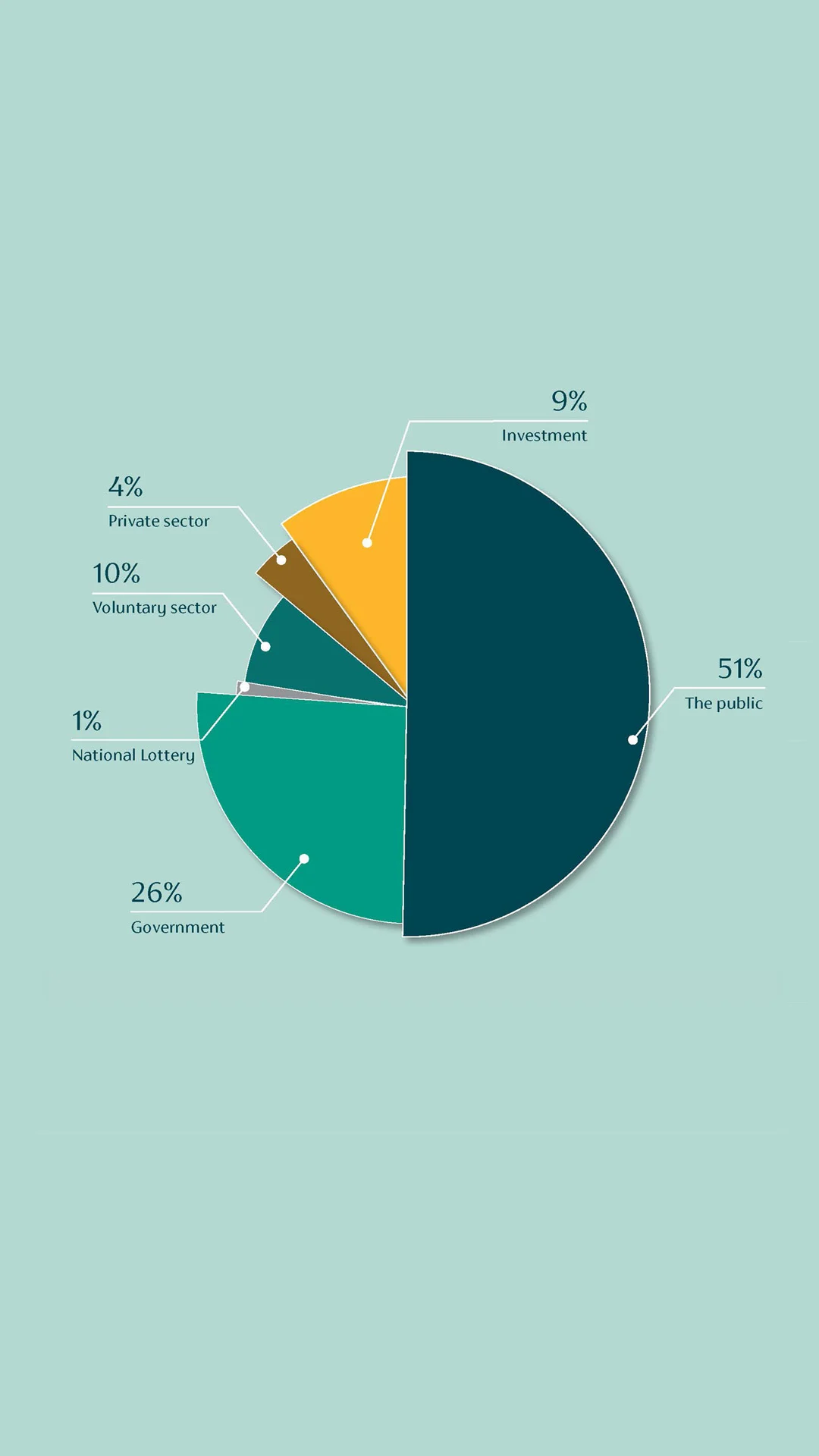
Across charities of all sizes, the public is the most important source of income for charitable organisations.
This is especially the case for micro and small organisations, where 62.5% of the income stems from the public. This share is smaller for larger organisations. For instance, major organisations draw 47.7% of their income from the public.
This includes donations, fundraising, or legacies. For larger organisations, the voluntary sector, such as foundations or trusts, plays a more prominent role. For example, 16.2% of the income of super-major organisations stems from the voluntary sector, whereas micro and small organisations only draw 5.3% of their income from this source.
The national lottery is only a minor source of income, with the share of total income generated by this source ranging between 0.5% and 1.7% across all sizes.
Employment
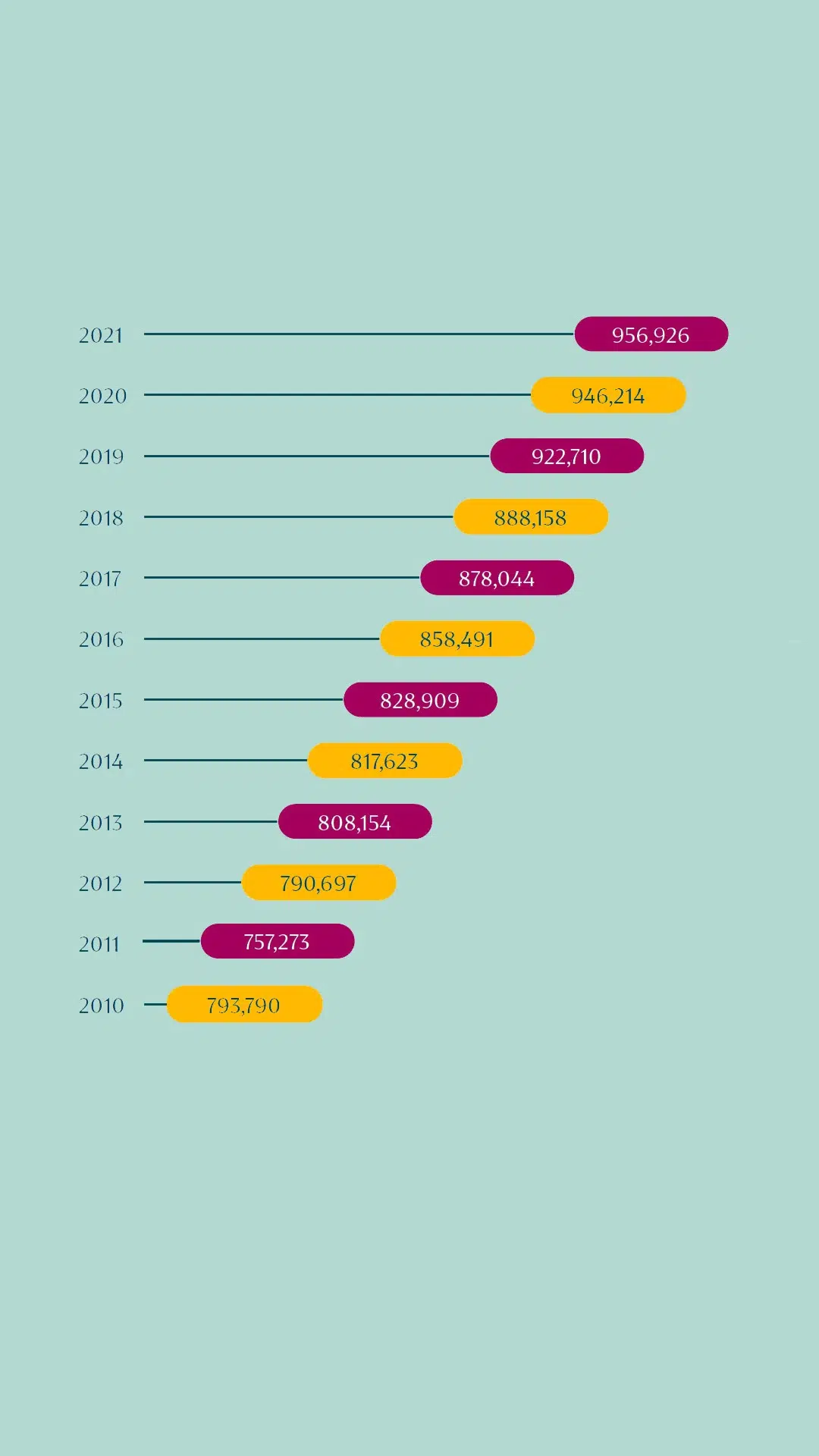
In Q1 2022, the charitable sector employed 1,020,753 people following considerable growth since the start of the last decade.
In Q1 2010 employment stood at 792,257. The number of people employed in the sector is substantial, when comparing it to other sectors. For instance, the financial sector employed 1.4 million people in Q1 2022, while 390,000 people were engaged in real estate activities.
Whilst the charitable sector is not subject to the ONS’ Standard Industrial Classification (SIC) 2007, this comparison does help to put the size of the charitable sector into perspective.
Charitable workforce
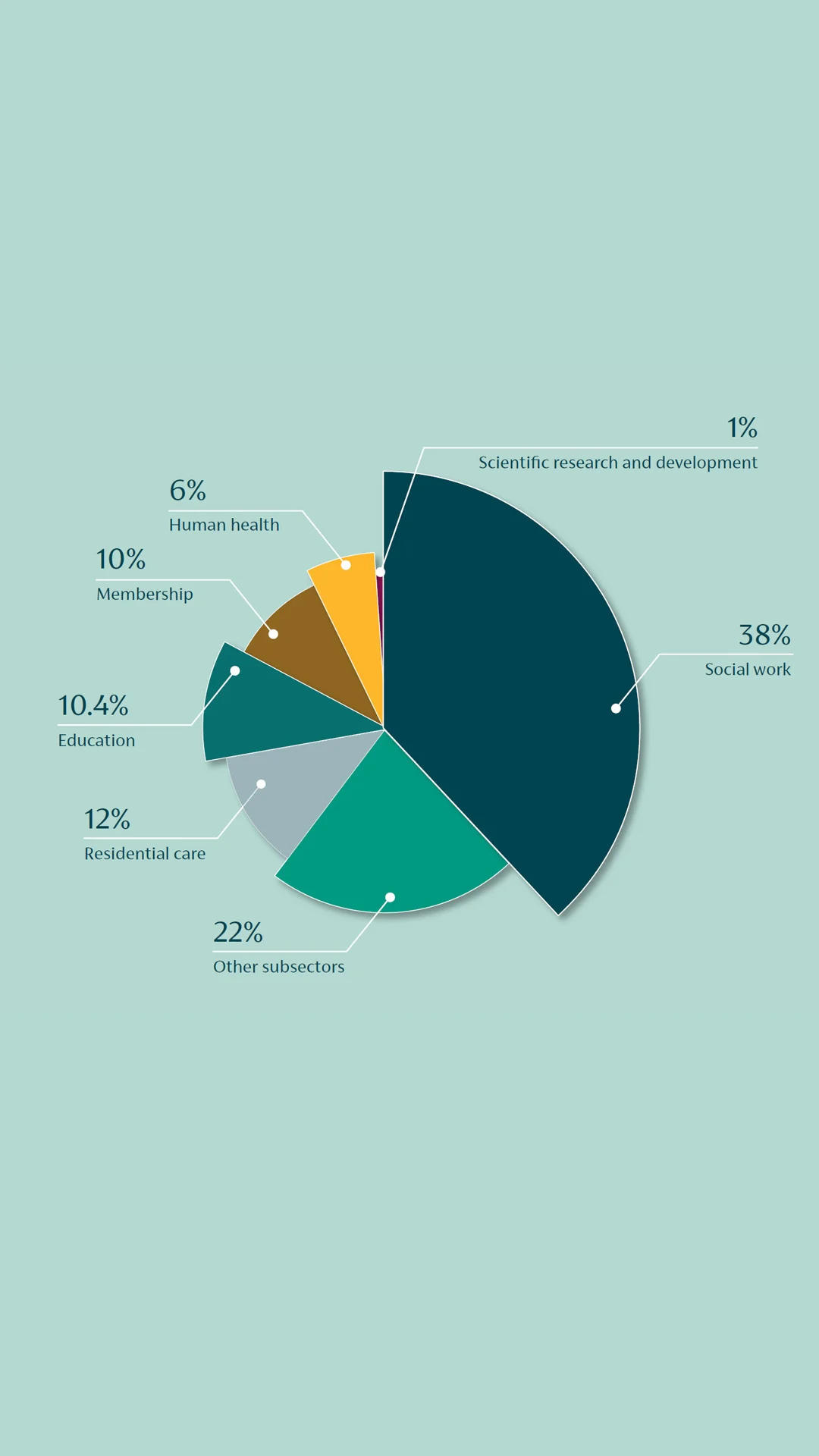
The largest share, 38%, of the charitable workforce is engaged in social work.
Care work in general accounts for a large share of the number of people employed in charitable organisations, with residential care making up a further 12.1%.
This is followed by education, in which 10.4% of employees are engaged.
Charity spending over time
The diagram shows total charity spending over time, including governance, charitable activities, grants and activities for raising funds. The figures have been adjusted for inflation and are in 2019/20 prices.
Since the beginning of the millennium, the spending volume of charitable organisations has gone up by 61.8%.
Spending on charitable activities grew by 79.4% over that period, taking spend on such activities from £21.4 billion in 2000/01 to £38.4 billion in 2018/19.
By contrast, the volume of grants increased by just 25.4%. In 2018/19 the volume stood at £7.6 billion, up from £6.1 billion in 2000/01.

Conclusion
Charities contribute to the economy and society in myriad ways. Our new research quantifies the impact of charitable giving, and by doing so highlights its fundamental importance.
The UK would be a much poorer place without it, in so many ways. The headline figure is that the annual value of volunteering in 2022 is £18.7 billion. The annual value of donations is £4.3 billion. The total value of giving in 2022 is £23 billion, which is a significant contribution to the society.
The charity sector relies on the generosity of the British public and the spirit of benevolence that saw us through the pandemic shows no signs of waning. However, the cost-of-living crisis is biting hard. While the number of people giving to charity has increased, our research found that the average amount given in 2022 fell significantly, taking overall giving from £9.3billion to £4.3billion last year. This is a concern for the charity sector – their services are under more pressure than ever but with less money flowing inwards.
What’s hugely positive is that our analysis suggests that both volunteering and donating are on an upward curve over the longer term, and this provides optimism for the sector. We believe more could be done to support this incredible resource, at all levels of society, and as the UK’s third largest corporate donor (UK Guide to Company Giving 2023/2024), we have an ambition to support the sector through these difficult times. To achieve this, we have identified three themes and questions arising from this report that we believe deserve greater scrutiny.
The charity sector in the UK is undervalued in economic terms –
The premise of this report was to reveal, for the first time, the hidden value of giving in the UK. What we discovered is charitable activities in 2022 amounted to £23 billion in value – larger than the sports and gambling sector. This is an undervalued sector that deserves greater recognition and support.
Question:
How can the charity sector’s output be better measured to reflect its value to the UK economy and what policy measures will ensure the sector thrives into the future?
The British public are more engaged than ever with civil society
This report has found that while the average cash value of donations and amount of time spent volunteering have decreased during the cost-of-living crisis, the number of people giving and volunteering is significantly higher than pre-pandemic levels. This resilience is good news for the third sector. As the economy starts to recover, this increase in charitable habits should reap benefits for charities.
It should also reap benefits for our national wellbeing. Our research has found a direct correlation between giving and volunteering and life satisfaction. UK adults that both donate to charity and volunteer have a significantly higher average life satisfaction than those that don’t engage in any charitable giving. Our analysis also found an association between charitable giving – of either time or money – and positive mental health outcomes. This is compelling evidence that volunteering should be considered as a way of improving the wellbeing of the nation.
Question:
How can the charity sector harness the support of the British public to have a greater impact in society and what more should it be doing to promote volunteering including its wellbeing benefits?
The role of corporates is key
As a leading corporate donor, Benefact Group believes business has an important role to play in creating a movement for good in society. Many companies give time and money generously, but we believe the corporate sector can play a more influential role in supporting the charity sector. For example, most businesses offer at least one volunteering day for all employees, but greater freedom and incentives for employees to get involved with charities would reap multiple benefits.
We believe the combined effort of businesses collectively donating a proportion of profits and the public kindly giving up their time to volunteer would be a powerful force in society,
Question:
How can we encourage corporates to increase their giving and support for the charity sector?
In order to address these questions, and explore these three themes in greater depth, we are planning to bring together organisations committed to devising methods of growing charitable giving from a donation and volunteering perspective. We will convene key charity stakeholder groups to discuss issues, agree research areas and commission research. Our ambition is to set in motion initiatives and policy recommendations, aligned to the three themes outlined above, which deliver a meaningful impact to giving in the UK, providing vital support to those most in need as well as mental health and economic benefits to society at large.
Long term hope
Why do we give our time and money to charity? We want to help others and support causes that matter to us. But our research provides further motivation. Giving makes us feel good. It makes us feel more optimistic, connected and satisfied with our lives.