

How purpose shapes career decisions
Purpose is increasingly shaping where people choose to work, how long they stay, and how positively they feel about their employer. Our latest research reveals why purpose is becoming a key factor in the modern workforce.

The role of purpose in the workplace has evolved significantly in recent years. While competitive pay, strong benefits and career opportunities remain critical when choosing an employer, new research suggests employees are increasingly looking for jobs that make a difference:
- A clear sense of purpose
- Values they can identify with
- Evidence that the organisation is making a positive contribution beyond profit
To better understand the role purpose plays in career decisions, Benefact Group commissioned YouGov to survey 2,187 adults across the nation. The findings reveal that purpose is not simply a desirable addition to an employer proposition. For many people, it is increasingly influencing where they choose to work, how long they stay, and how positively they feel about their employer.

Purpose matters to the vast majority of adults
Three-quarters of adults say a company’s purpose plays some role in whether they apply for, or accept, a job offer. Only 13% say they do not consider an employer’s purpose at all when making career decisions.
The research found that 10% would not join an organisation that lacks a strong purpose, while 29% say it is an important factor when considering a role. These findings show that purpose is becoming an increasingly important factor in how people choose where to work.
For many adults, an organisation’s values and wider contribution are now important considerations when making career decisions.
Purpose can be the deciding factor when pay is equal
Despite salary remaining the most important consideration for nearly all employees, purpose is becoming a meaningful differentiator when employers offer similar financial packages.
While salary remains the most important factor overall for adults, 53% say that strong social purpose is important. This suggests purpose is not replacing traditional employment benefits entirely, but increasingly shaping decisions once core expectations have been met.
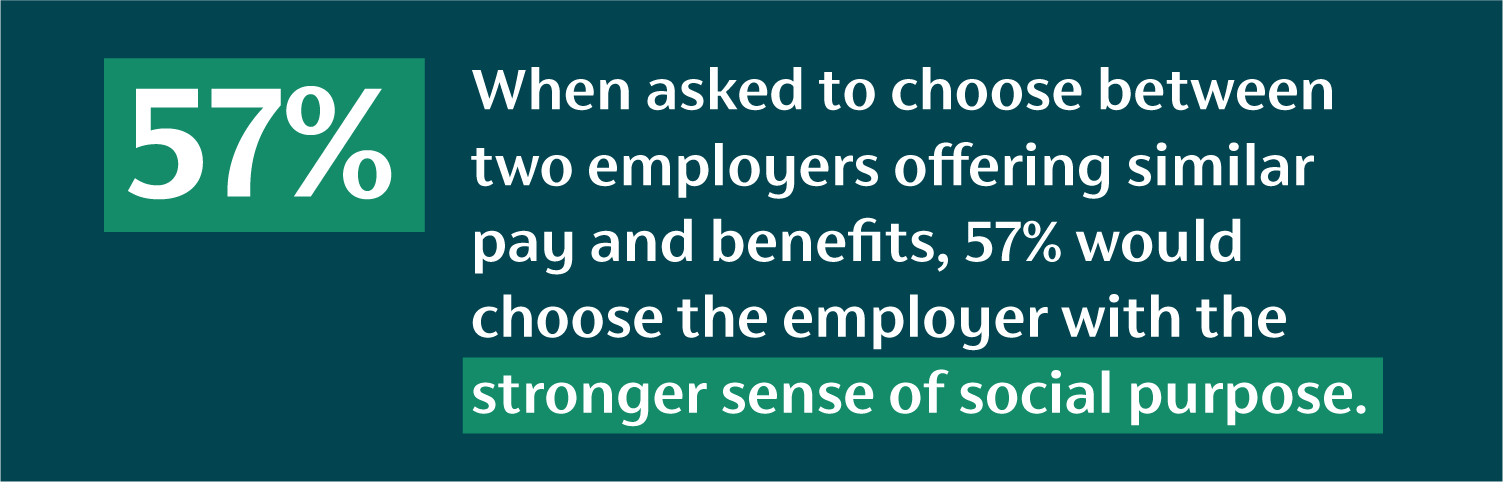
When asked to choose between two employers offering similar pay and benefits, 57% would choose the employer with the stronger sense of social purpose.
The findings go further still.
More than four in ten adults (41%) say they would turn down a high-paying job if the organisation’s values did not align with their own.

Retention benefits of purpose-led organisations
Purpose does not only affect attraction. It also appears to play a significant role in retention.
Almost two-thirds of adults say they would stay longer with an organisation whose purpose aligns with their personal values, including 34% who say they would stay “a lot longer”.
The UK jobs market has cooled compared with the post-pandemic hiring boom, with vacancies falling and employers generally recruiting more cautiously. However, many organisations still report significant difficulty recruiting people with the right skills, particularly in technology, engineering, healthcare, social care and specialist professional roles.
Organisations are often focused on what attracts candidates. This research suggests equal attention should be given to the factors that encourage talented people to remain and develop their careers within a business.

Purpose drives pride, advocacy and discretionary effort
One of the strongest themes emerging from the research is the connection between purpose and employee engagement.
Employees who work for organisations with a strong social mission are significantly more likely to feel positively about their employer:
- 79% say they would feel proud to work there
- 79% would speak positively about the business to others
- 68% would be more likely to go above and beyond in their role
Additionally:
- 53% say an organisation’s purpose increases their pride and motivation at work
- Only 2% believe it would have a negative impact
These findings suggest purpose can do more than help organisations attract and retain talent. It can also encourage employees to become stronger advocates for their employer, feel more engaged in their work and go the extra mile.
The appeal of purpose-led businesses
The research also explored attitudes towards organisations that exist to create social good.
Nearly two-thirds of adults say they would find it appealing to work for a company that donates all available profits to charity.
In addition:
- 49% would be more likely to recommend such an organisation as an employer
- Just 2% say they would be less likely to recommend it
The findings suggest that a clear charitable purpose can help organisations stand out as employers, increasing both their appeal and the likelihood that employees will recommend them to others.
Purpose matters at every career stage
While there is often an assumption that purpose is primarily important to younger workers, the findings paint a more nuanced picture.
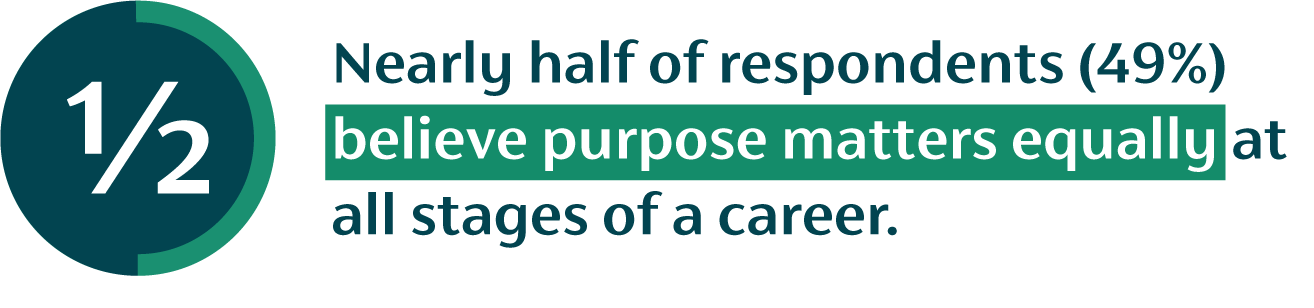
Nearly half of respondents (49%) believe purpose matters equally at all stages of a career.
When asked whether purpose becomes more or less important over time, more people said it had become more important as their career progressed than less important.
These findings challenge the perception that purpose is primarily a concern for younger employees. Instead, they suggest that purpose remains an important consideration throughout a person’s career and may become even more significant over time.
What this means for employers
The research paints a clear picture. Employees still expect competitive pay, strong benefits and career development opportunities. However, these factors increasingly sit alongside another expectation: a meaningful organisational purpose that people can connect with.
For employers, purpose can no longer be viewed solely as a corporate responsibility initiative or a culture project. The findings suggest it has become a strategic business consideration that influences:
- Attraction of new talent
- Employee retention
- Workplace engagement
- Employer reputation
- Employee advocacy
As organisations compete for talent in a challenging market, those able to demonstrate a clear purpose, supported by meaningful action, may have a distinct advantage.
About the research
All figures, unless otherwise stated, are from YouGov Plc. Total sample size was 2187 adults. Fieldwork was undertaken in 2026. The survey was carried out online. The figures have been weighted and are representative of all UK adults (aged 18+).
About Benefact Group
Benefact Group is an international family of specialist financial services businesses, providing insurance, broking, and asset management services with a social purpose. Owned by a charity, we donate all available profits to good causes, creating positive impact for charities and communities in the UK, Ireland and beyond.
Through our Charity Support programme, we help charities thrive by providing practical resources, expert insights and opportunities to connect with peers, while our Movement for Good initiative directs funding to thousands of good causes each year.
Our purpose shapes everything we do, from how we support our customers and communities to how we support our people, helping them build careers that fulfil both their personal and professional ambitions while contributing to something bigger.
Find out more about Benefact Group career opportunities here.