

Under 16s social media ban: what could it mean for charities supporting young people?
New research explores how the under 16 social media ban could affect UK charities, balancing child online safety with access to support services.

As the UK moves closer to introducing restrictions on social media access for under-16s, the debate has largely focused on children’s online safety. But what could the changes mean for the charities that rely on digital channels to reach, engage and support vulnerable young people?
To better understand the sector’s perspective, we surveyed 368 charities across the UK. The findings show strong support for improving online safety for children, while also highlighting concern that a social media ban for under-16s could make vital support services harder to access.
Charities support children’s safety online but fear unintended consequences
There is little disagreement among charities about the need to protect children online. An overwhelming 97% of charities surveyed support efforts to reduce children’s exposure to online harms.
However, many organisations are concerned that restricting access to social media could have unintended consequences.
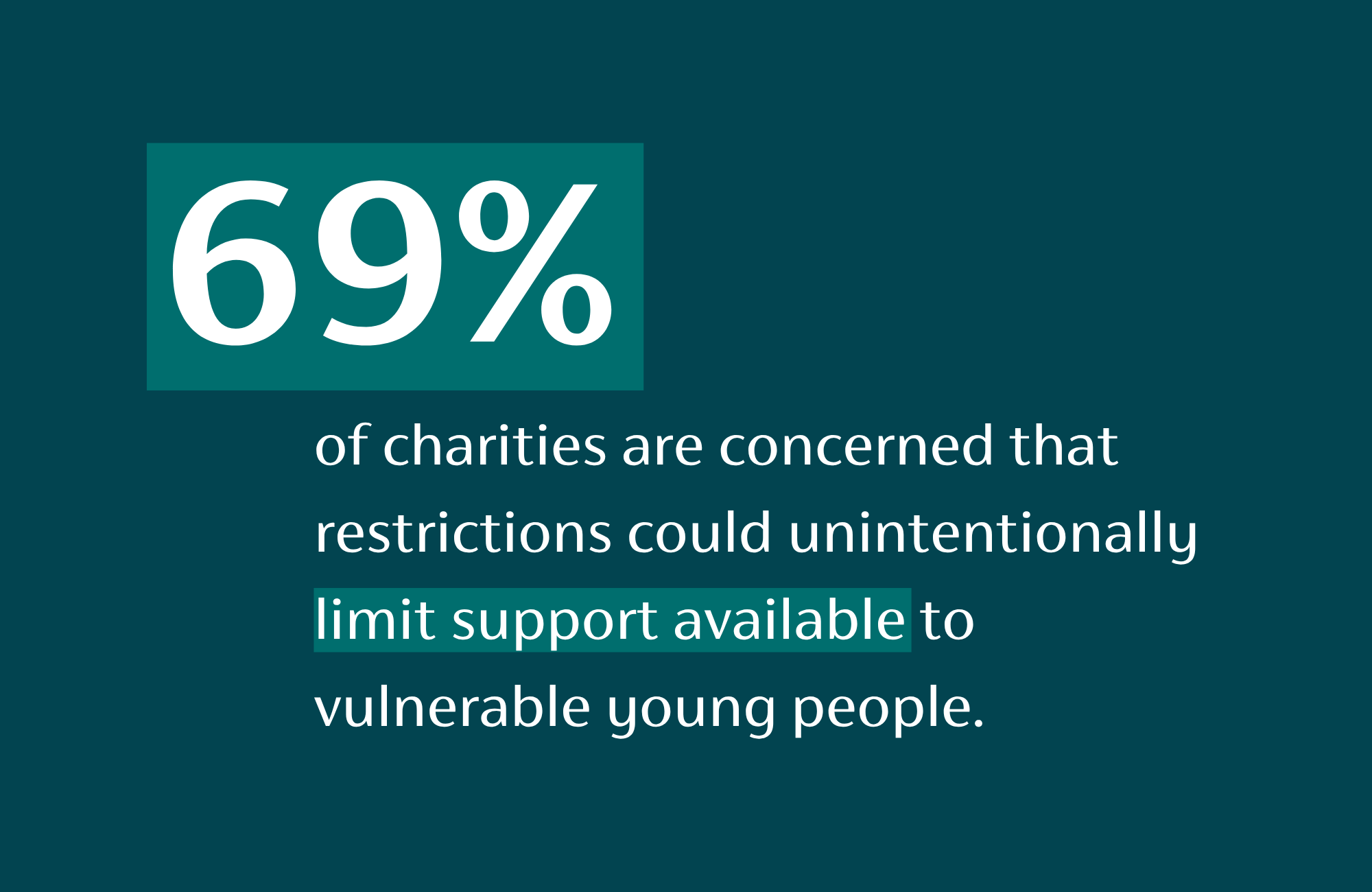
Nearly seven in ten charities (69%) said they are concerned that restrictions could unintentionally limit access to support for vulnerable young people. Charities specifically noted concern for those with mental health concerns (38%), in care (38%), and excluded from school (33%).
Social media has become an important route into support
More than half (52%) of charities surveyed said they communicate directly with young people through social media channels.
Charities reported using platforms to:
- Signpost support services
- Share educational content
- Deliver wellbeing and mental health messaging
- Raise awareness of local support and activities
- Encourage early intervention and help-seeking behaviours
A similar proportion (54%) said social media is important in helping young people under 16 become aware of their services.
Perhaps most significantly, almost one in four charities (23%) said they have used social media to engage young people who otherwise may never have sought support.
This finding suggests that, for some vulnerable young people, social media is not just a communication channel, but a gateway to help that might otherwise remain out of reach.
Reaching vulnerable young people remains a challenge
Many charities work with young people facing complex challenges, including poor mental health, social isolation, exploitation, crime and difficult family circumstances.
Traditional communication routes such as schools, community services and youth centres continue to play a vital role. However, charities report that social media has become an increasingly important way of reaching young people in the spaces where they already spend time.
As proposals for an under-16 social media ban continue to be discussed, some organisations are concerned it may reduce their access to trusted information, support networks and opportunities to seek help.
What charities are saying
Many of the organisations surveyed echoed similar concerns about preserving access to trusted support while reducing online harms.
Martin Cosser, CEO and Founder at Charlie’s Promise speaks to thousands of young people and sees just how powerful and devastating it can be.
He encourages building an online space where children are safe from harm, yet still able to reach the good things social media offers such as education, community and support. Ultimately, he feels that young people are owed that balance. Adding to this, he said:
“As a father who has lost a child to knife crime, I have enormous compassion for families whose children have been harmed, murdered, or targeted through social media. However, we can’t lose sight of the other side of this conversation or simply reduce this debate to whether social media is good or bad.
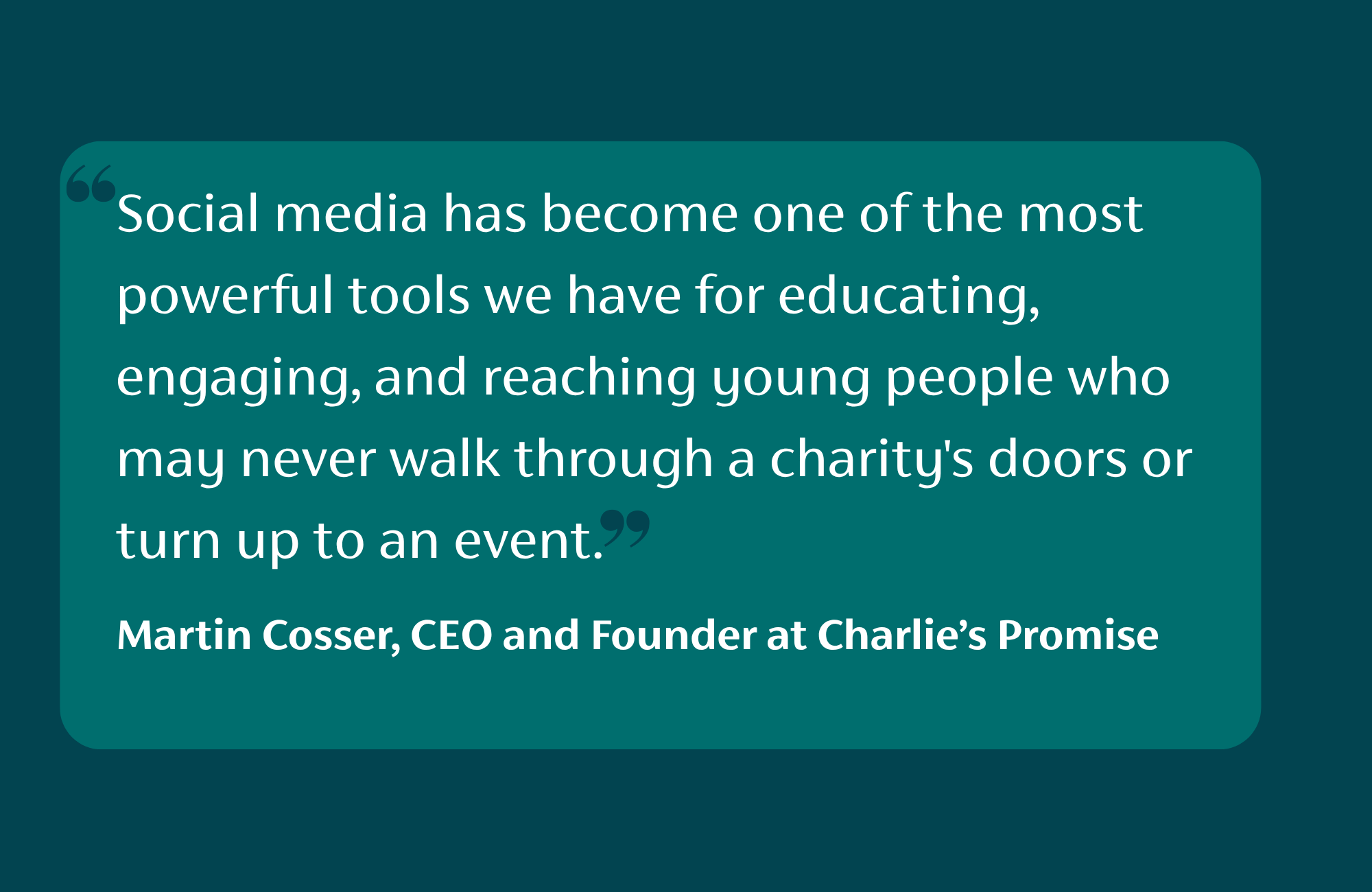
“Social media has become one of the most powerful tools we have for educating, engaging, and reaching young people who may never walk through a charity’s doors or turn up to an event. If we take it away without replacing it with something just as effective, we risk making the very young people we’re trying to protect even harder to reach.
“Any restrictions need to be matched by real investment in schools, youth services, community organisations, and charities. You can’t simply close one door and just assume another opens on its own.”
Could charities replace the reach of social media?
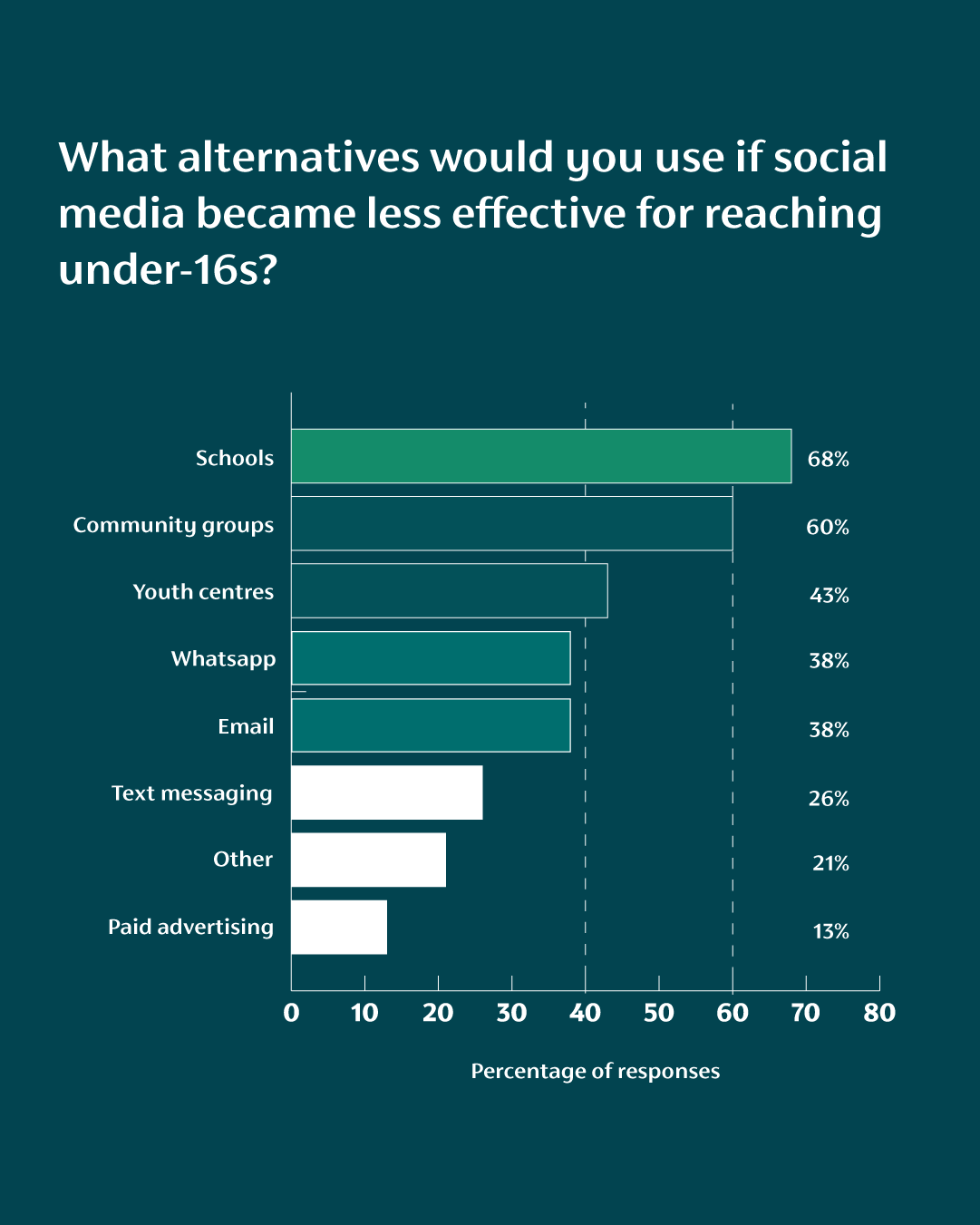
The research also explored how charities would adapt if social media became a less effective route for reaching under-16s.
Many organisations said they would increase their reliance on:
- Schools
- Community groups
- Youth centres
However, replacing digital reach is not without cost.
Almost two in five charities said they expect communication costs to increase if they are forced to rely more heavily on alternative channels.
Only 25% believe current funding levels would allow them to fully replace the reach currently provided by social media.
For charities already managing rising demand and stretched resources, higher communication costs could make it harder to maintain the same level of reach among vulnerable young people.
What charities want policymakers to consider
The research suggests that charities support the principle of protecting children from online harm, but many would like policymakers to carefully consider how support networks, including schools, are going to be impacted.
Restrictions on social media access need to be accompanied by investment in these alternative access points. They are going to become increasingly important for reaching young people and provide them with support and resources.
Balancing child protection and access to support
The findings highlight the complexity of the debate around social media and young people’s wellbeing.
While there is widespread recognition of the risks associated with harmful online content, charities are also drawing attention to the positive role social media can play in helping vulnerable young people find information, build connections and access support.
Chris Pitt, Group Impact Director at Benefact Group, said:
“As an organisation that has donated over £250 million to more than 10,000 charities since 2014, we wanted to understand how changes to social media access could affect the young people they work with. While charities overwhelmingly support efforts to protect children online, many are concerned that vulnerable young people could lose an important route to help and information.
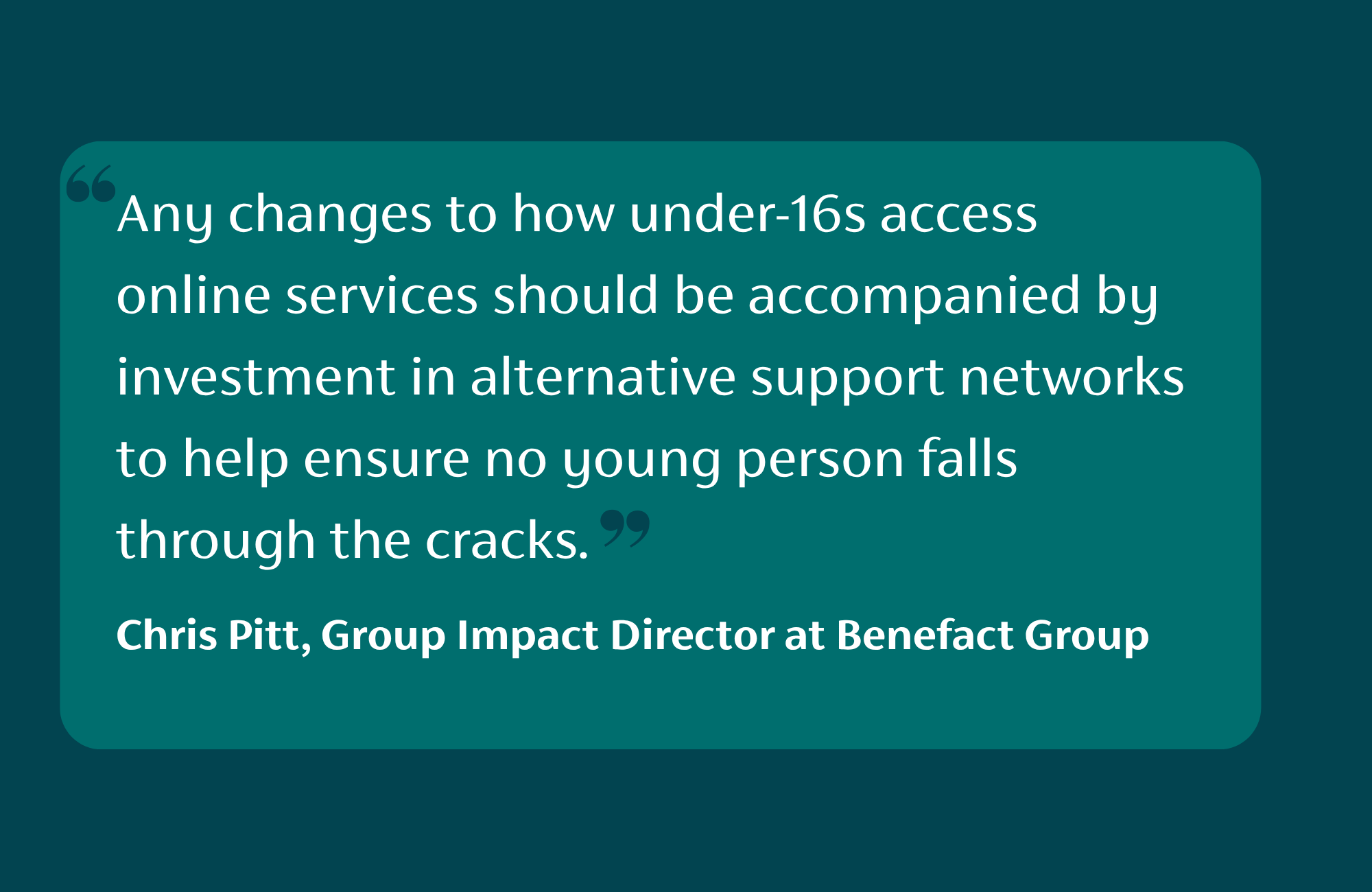
Schools, charities and community organisations play a vital role in supporting vulnerable young people and may face additional pressure if social media becomes a less effective route to support. Any changes to how under-16s access online services should be accompanied by investment in alternative support networks to help ensure no young person falls through the cracks.
“Technology companies, policymakers, schools and charities all have a role to play in helping young people stay safe online while maintaining access to trusted sources of information and support.”
About the research
Benefact Group surveyed 368 charities between 21 and 31 July 2026. Participating organisations represented a range of charities supporting children, young people and wider community needs across the UK.
About Benefact Group
Benefact Group is an international family of specialist financial services businesses that gives all available profits to good causes. Through our Charity Support programme, we provide charities with practical resources, expert insights and networking opportunities, while our Benefact Group Movement for Good helps direct funding to thousands of good causes across the UK and Ireland.