
Major donors’ voices busting the myths

Most fundraisers carry a mental picture of the major donor: wealthy, probably male, probably drawn to prestigious events. That picture shapes strategy and according to fundraising specialists Davinia Batley and Louise Morris, it’s usually wrong.

Drawing on more than 150 interviews with philanthropists and major donors, Davinia and Louise recently delivered a webinar for Benefact Group’s Charity Support programme that challenged seven of the most persistent assumptions in the sector. Over 1,700 fundraisers registered to hear it. Here’s the webinar recording and the insights that matter most.

Benefact Group Movement for Good logo

Our charity support programme includes this free fundraising webinar series, in-person Fundraising Forums and Founders Forums, the For Impact podcast, and the Movement for Good grant programme.

What Major Donors Actually Want and the Myths Stopping Charities from Success

Is major donor fundraising really not for your charity?

This is the most common self-exclusion. Charities assume major donor fundraising requires a large team, a high-end events budget, and an existing network of wealthy contacts. It doesn’t require any of those things to start.

“It’s not what new things do we need to do — it’s what things are we already doing that we can tweak or adjust.” — Davinia Batley

At a small charity, a major donor threshold might begin at £2,000, not £20,000. Five donors giving £20,000 a year can fundamentally change an organisation’s finances. You don’t need hundreds.

Davinia offers a cautionary example: a charity she worked with that closed its doors had never developed a major donor programme but a review of its regular giving database revealed a high-net-worth individual who had been giving £20 a month for years. Because nobody had been curious enough to build that relationship, no pathway to significant support had ever been created. ‘There’s a real future opportunity to think about,’ she says.

Three practical starting points:

  1. Look at who’s already giving above average in your existing base, even small amounts
  2. Treat your website as a shop window and make it easy for a donor to reach a real person, not just a generic contact form
  3. Accept that every major donor programme starts with one gift

Do donors only give to well-known causes?

Smaller or less well-known charities assume that major donors will only support recognisable brands. But academic research by Dr Beth Brie at the University of Kent found that one of the top reasons donors give is simply that they were made aware of a cause. Awareness, not reputation, drives many decisions.

The generational shift reinforces this. Younger major donors, broadly those under 50, are increasingly focused on impact and cause over institutional name. Local and place-based giving is also growing: donors give back to where they came from, where their identity lives. Louise describes a Welsh charity whose major donors were Welsh diaspora in London. A Scottish mountain charity whose donors are mostly English hillwalkers.

Louise on assumptions about wealth: “I’ve had a number of difficult conversations with clients about different ethnic communities — including the Islamic community, who are very well-known to be incredibly generous and sometimes it’s been dismissed. There is wealth there.”

Don’t try to be something you’re not. Lean into what makes your charity distinctive community connection, proximity to impact, ability to make a donor a big fish in a smaller pond.

Does hard-hitting messaging raise more money?

Emotion drives giving but the emotion doesn’t need to be negative. Davinia describes a donor representing a family foundation who noticed a charity’s messaging had shifted over time from forward-looking optimism to a focus on closures, crisis, and what was being lost. The donor found this hard to engage with and observed that ‘the level of desperation has changed.’ She used a phrase Davinia finds herself returning to: ‘A thread of hope needs to permeate throughout communications.’

‘People invest in hope,’ says Davinia. Louise adds: ‘If we don’t have hope – whether it’s for peace, climate change, improving things for communities why do any of us give? Major donors are absolutely no different.’

In practice: know what makes you proud about your organisation. Lead with what’s possible, not only what’s at risk. Acknowledge difficulty, but frame it as something your donor’s contribution can help to change not something insurmountable.

Where should you start if you’re new to major donor fundraising?

Both Davinia and Louise point to the same starting place: closest to home.

  • Look at trustees, volunteers, and existing donors, who has already given above average, even modestly?
  • Think about who in your network could be a ‘connector’ – someone who introduces you to others, rather than gives themselves
  • Don’t look at the rich list; cold outreach to strangers is resource-intensive and rarely works without an existing connection
  • Do basic wealth research within GDPR to understand capacity before approaching

And on resourcing: Louise’s reminder from her Unilever background is direct. No company would launch a new product line without investment and expect growth. Yet charities routinely try to add major donor work to already full remits. If you’re serious about building a programme, you need to be honest about what you’ll stop doing to create space for it.

Frequently asked questions about major donor fundraising

How do I find major donors for my charity?

Start with who already knows and supports your charity – existing donors, trustees, and volunteers. Look for those who have given above average, even at modest levels. Research within GDPR to understand capacity. The most effective major donor relationships almost always start from a warm connection, not cold outreach to strangers.

How do I approach donors for funding?

Begin with curiosity, not a pitch. Find out what they care about, what other causes they support, and how they’d like to be involved. Start by inviting them to understand your work more deeply before any financial conversation. Transparency and authenticity build trust faster than a polished proposal.

Can small charities do major donor fundraising?

Yes. Major donor fundraising is scalable, a threshold of £2,000 is legitimate for a small charity, not £20,000 or more. Five donors giving £20,000 a year each can significantly change a small organisation’s financial position. Every programme starts with one gift.

How do I re-engage a major donor who has lapsed?

Don’t just send another impact report – pick up the phone and be honest. Acknowledge that contact has been inconsistent, ask how they’d have wanted to be updated, and invite their advice. Connection is different from communication. Asking for input rather than money is often the most effective re-engagement tool.

What do major donors actually want from charities?

Research from 150+ donor interviews by Summon Fundraising suggests that major donors want authentic relationships, honest communication about challenges and progress, meaningful involvement (not just financial transactions), and evidence that their gift makes a real difference. They don’t always need big events, brand recognition, or a perfect pitch, they need to trust you.

Keep learning with Benefact Group’s free Charity Support programme

This article draws on the Benefact Group webinar ‘Major Donor Voices: Busting the Myths’, featuring Davinia Batley and Louise Morris, delivered in partnership with Fundraising Everywhere. More resources and articles are available free on our Charity Support page, alongside webinars on corporate fundraising, trusts and foundations, and more.

Benefact Group is owned by the Benefact Trust, a registered charity. All available profits from its financial services businesses go to good causes, over £250 million in the last decade. The Benefact Group Movement for Good programme gives charities the chance to access to funding throughout the year.

Join over 1,900 charity professionals in the Benefact Group Charity Network Facebook group.

You can also listen to the For Impact: The Charity Podcast with Felicia Willow and Chris Pitt.

Disclaimer

The information in this presentation is provided for information purposes only and is general and educational in nature and does not constitute legal advice. The information contained herein should not be considered as a substitute for seeking professional advice in specific circumstances.
All opinions expressed are the individuals own and not of (or to be affiliated with) the Benefact Group plc or its group companies.
Benefact Group plc shall not be liable for your use or any reliance on, or action taken (or not taken) by you and any loss, however incurred, as a result; all responsibility for such is excluded (except for that which cannot be excluded by law) by the Benefact Group plc.

Webinar Guest Speaker

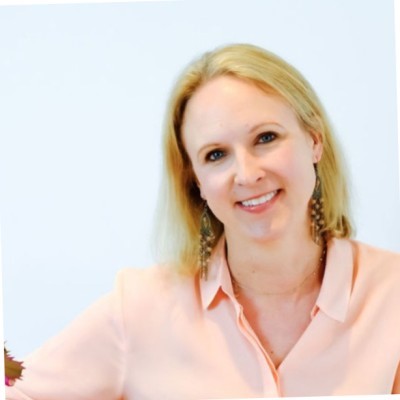
Davinia Batley

Founder, Champion Fundraising

Davinia Batley brings over 20 years’ experience in income generation for small to medium-sized charities, with a deep understanding of both the pressures and possibilities of the sector. Through Champion Fundraising, she provides consultancy, interim support, training, and development to help organisations grow income strategically and plan ahead. She also works closely with individuals to explore mindset, means, and methods to thrive in fundraising.

https://www.linkedin.com/in/daviniabatley/
Louise Morris

Founder and Director, Summit Fundraising

Louise Morris is a major donor fundraising specialist who helps charities raise more large gifts with confidence. She supports organisations to build, refine, and grow major donor programmes, whether they are just starting out or looking to unlock greater potential. Through strategic guidance and practical support, Louise enables charities to develop clear plans and secure transformational gifts.

https://www.linkedin.com/in/louise-morrisminstf/
webinar thumbnail Major Donors’ Voices – Busting the Myths Qa

Q&A: Major Donors’ Voices – Busting the Myths

This Major Donors’ Voices webinar, drew more than 1,800 registrations, and far more questions than we could answer live. So, we brought fundraising consultants Louise Morris of Summit Fundraising and Davinia Batley of Champion Fundraising back, hosted by Ian Tate, to tackle the ones that came up most. From defining a major gift to making the ask, stewardship on a stretched budget and the rise of donor advised funds — here are their practical, myth-busting answers.

Webinar Image, how to ensure you are set up for fundraising success

FundrAIsing: How to improve fundraising opportunities with AI

AI continues to be a hot topic. In this session we will explore the potential opportunities and challenges that rapidly developing Artificial Intelligence (AI) technology will bring for charities. We will look at how AI is already being used to help deliver charitable social missions in innovative new ways, and how the technology might radically alter the operating environment for charities in the future, by creating both new ways of working as well as new practical and ethical challenges.

Developing and nurturing high value relationships

Developing and nurturing high value relationships

Many organisations dismiss “Major Giving” because they assume it is too expensive, believe they need connections to millionaires or worry about how to justify a ‘big ask’ of donors. In this webinar, Mark Carrigan, MD Carrigan Consulting Ltd draws on his 20+ years of experience in facilitating high value relationships to show that achieving transformational results is attainable for organisations of any size. He outlines the process, provides straightforward frameworks for success, shares hard-truth realities, and offers strategies for avoiding the pitfalls.